WHY THE ECLIPSE?
The phenomenon, the place, and how to witness it.
The eclipse is coming. Just look up — and pick the right place to do it from.
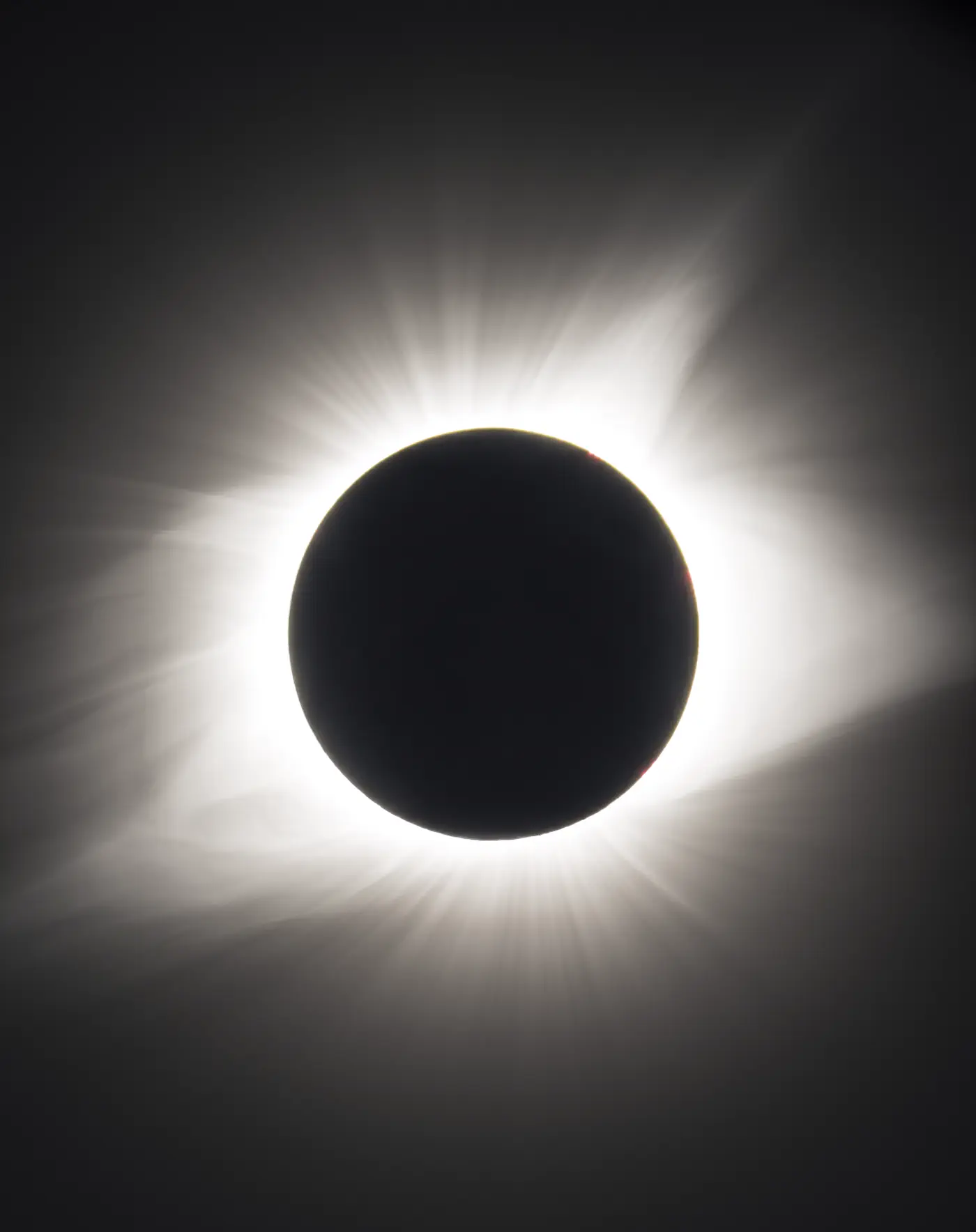
The eclipse is coming
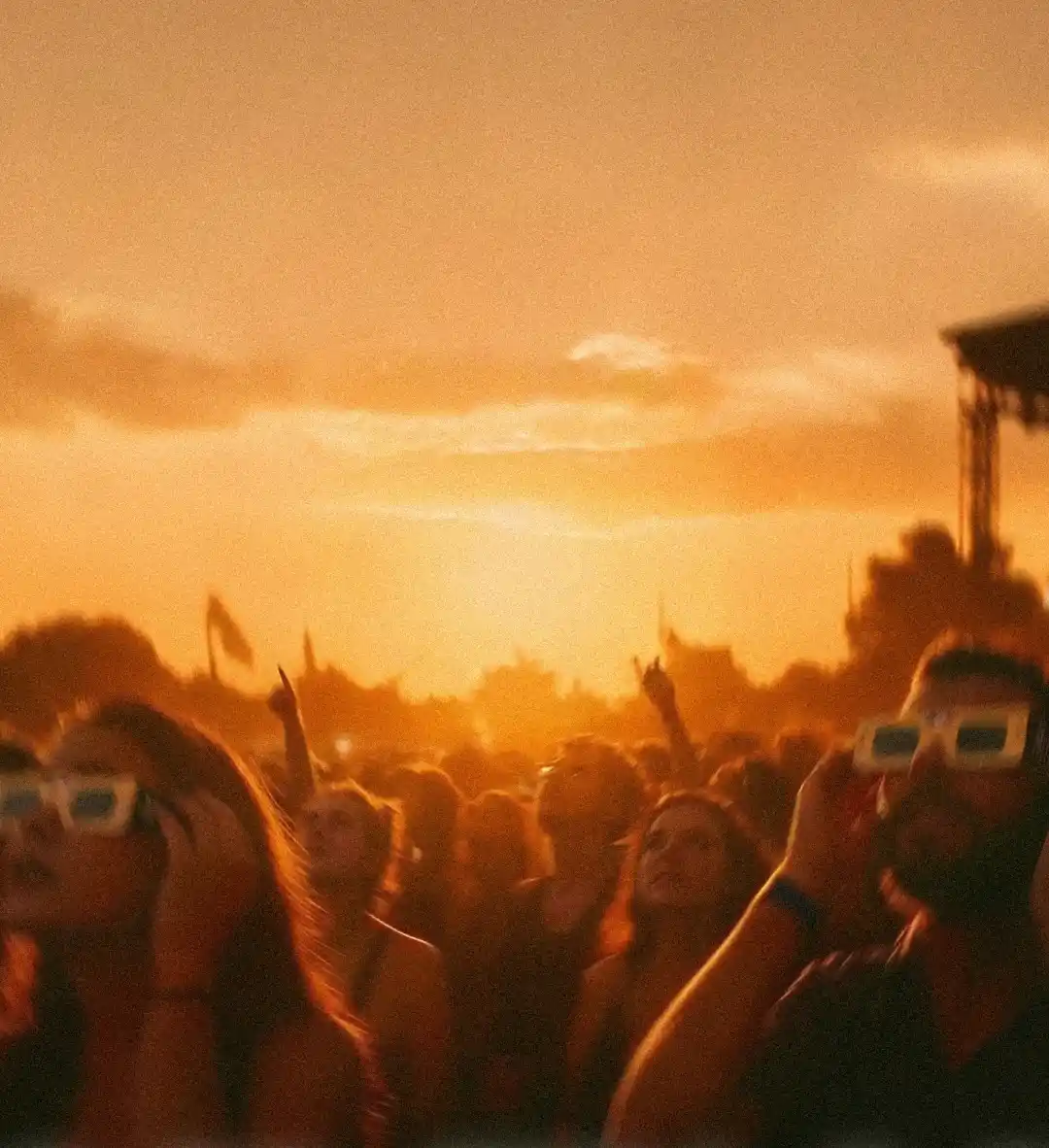
Just look up
At the right place and the right time
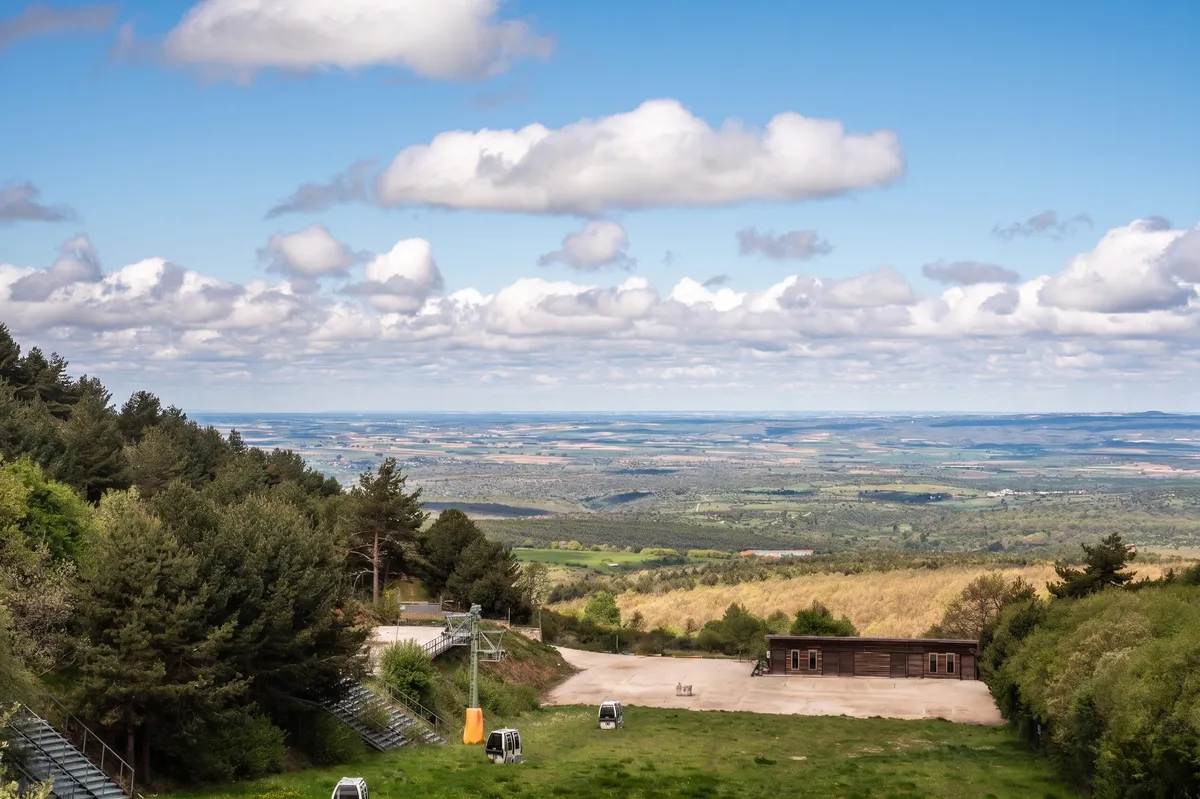
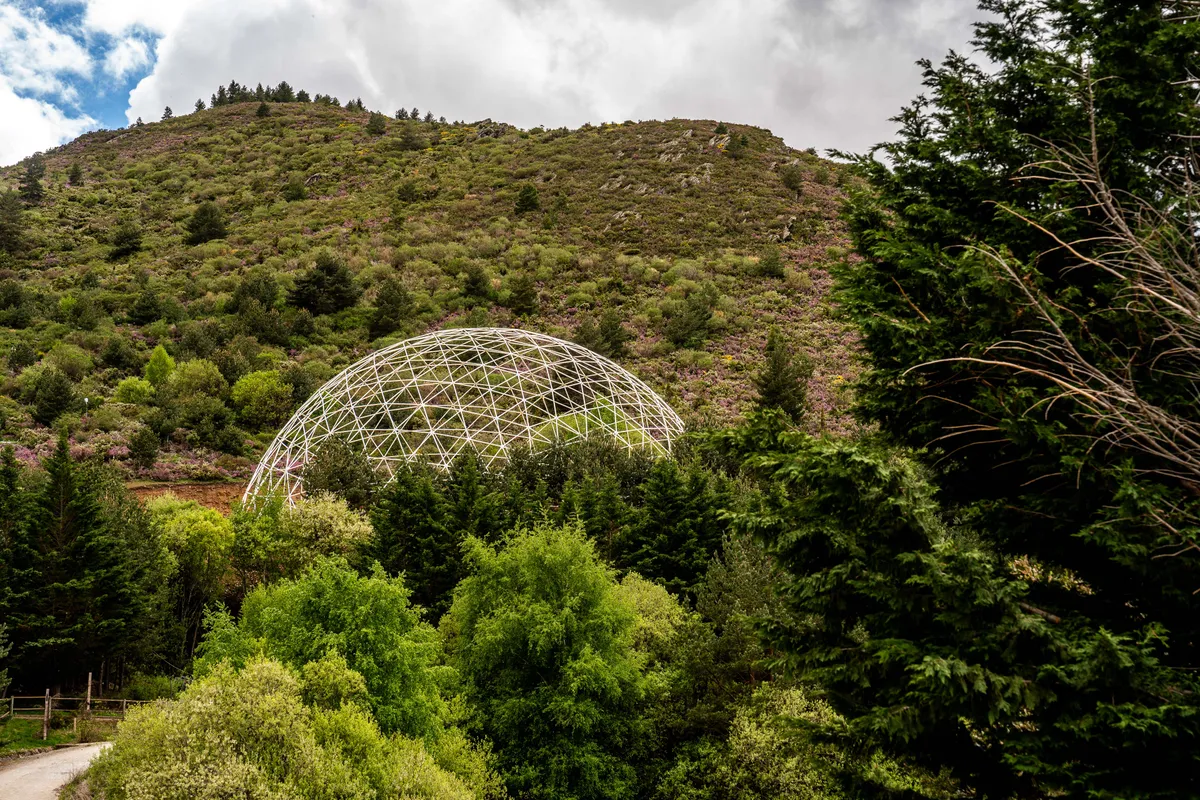
POV: Main stage view at totality
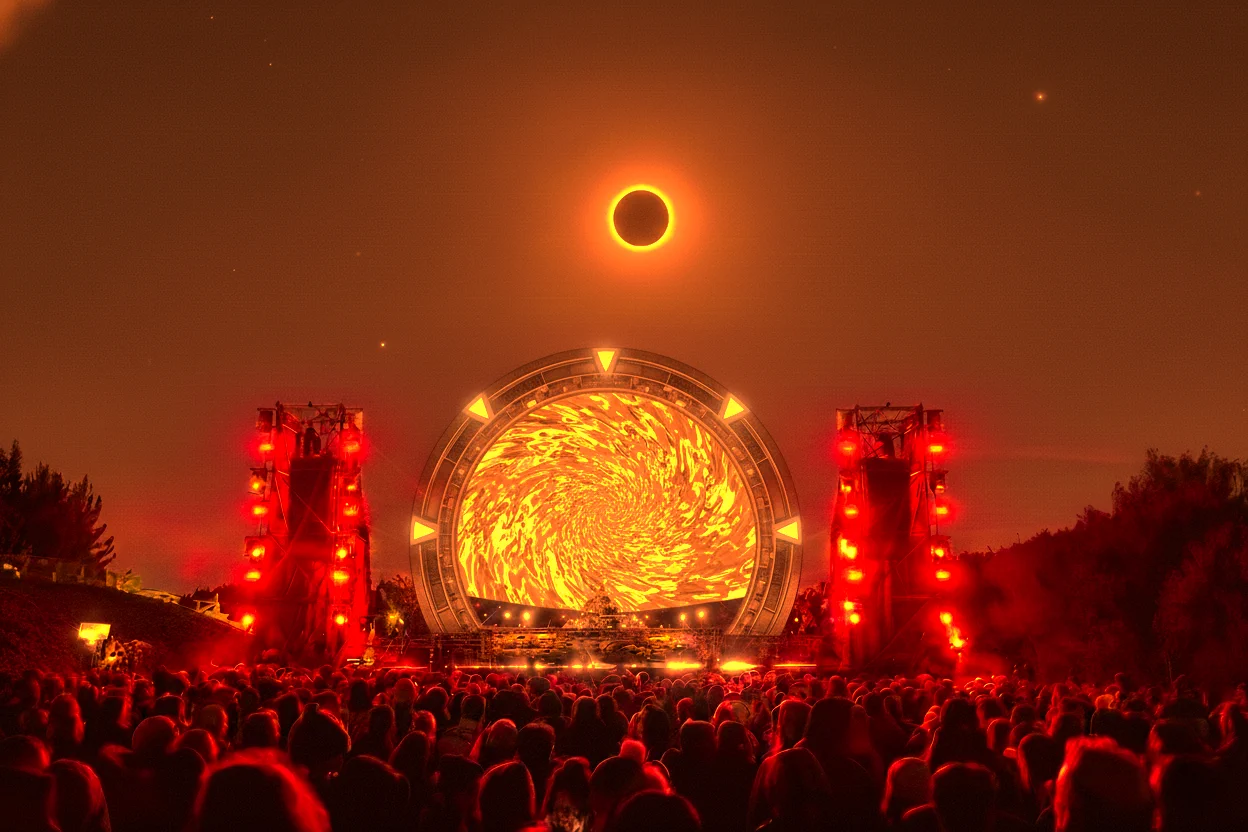
Eclipse stage mockup
WHAT TO KNOW ABOUT THE ECLIPSE
THE ECLIPSE IS ULTRA RARE
Most people will never witness a total solar eclipse in their lifetime — they only sweep over any given spot on Earth once every few hundred years. This one is the first to cross mainland Spain since 1905, and the first to cross Europe since 1999, exactly 27 years and 1 day before the 2026 eclipse occurs.
THE ECLIPSE IS MEANINGFUL
A study of millions of posts from the 2017 eclipse found people in the path of totality used more collective ("we," "us") and prosocial language than those outside it. Per Scientific American, total solar eclipses strengthen social bonding and reduce self-focused language.
THE ECLIPSE CREATES COMMUNITIES
Over 30,000 attended the Texas Eclipse festival in 2024, and 30,000 more gathered at Symbiosis Eclipse in 2017. Why? "There was a sense of renewed energy and celestial mysticism — but we all had the bond."
WHY LA PINILLA?
Picked specifically for the best eclipse viewing experience.
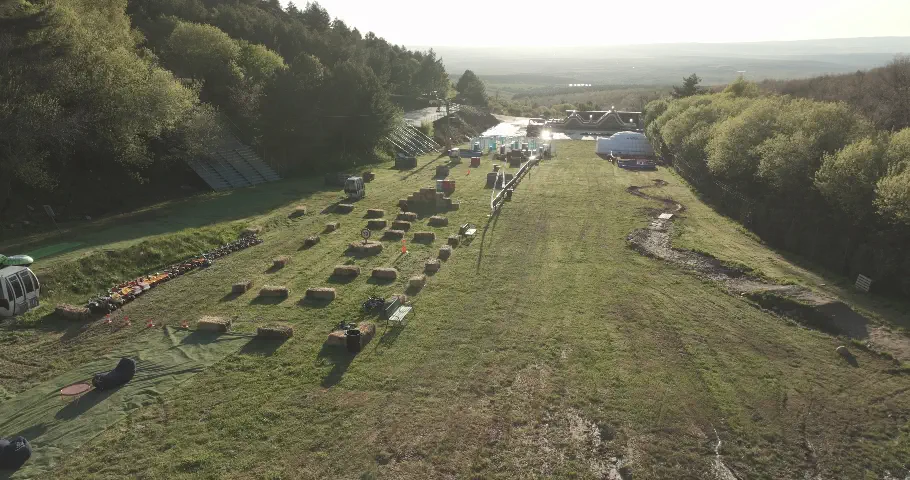
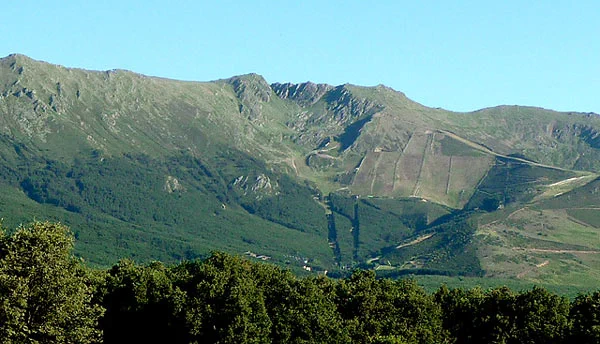
Best place to view the Spain 2026 eclipse
How to view it well
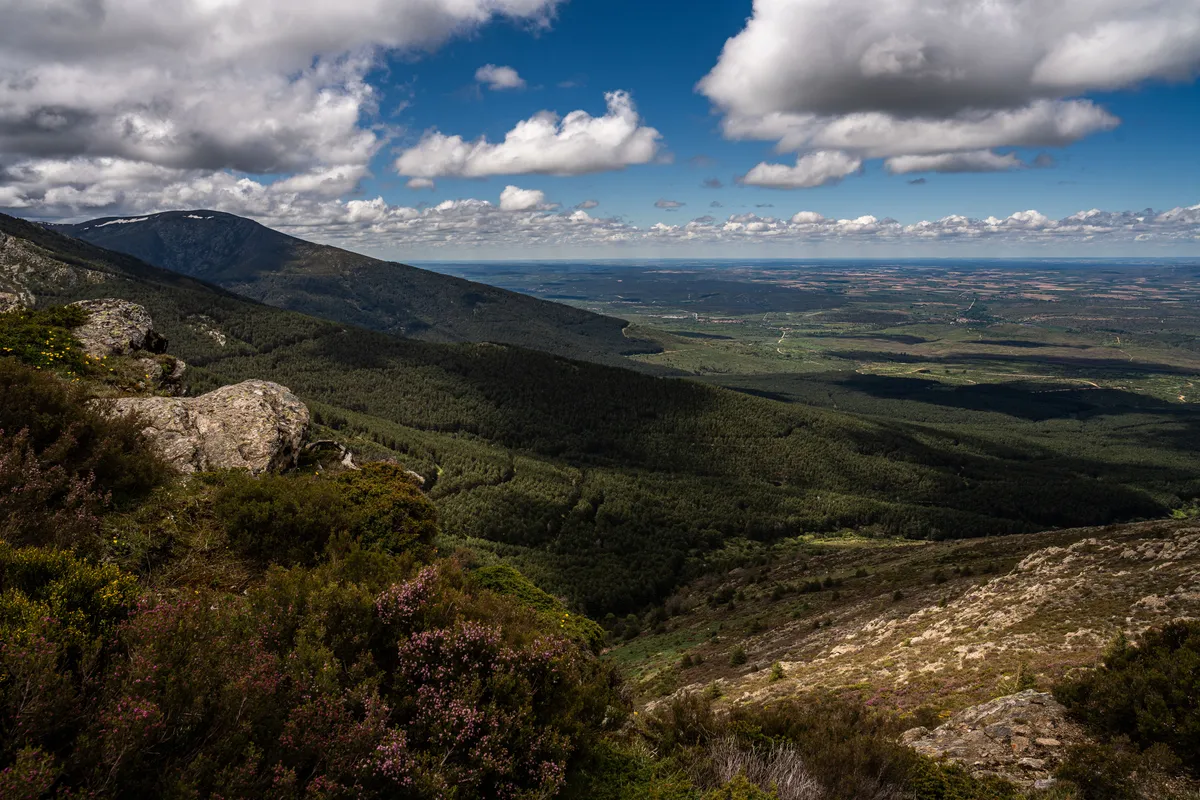
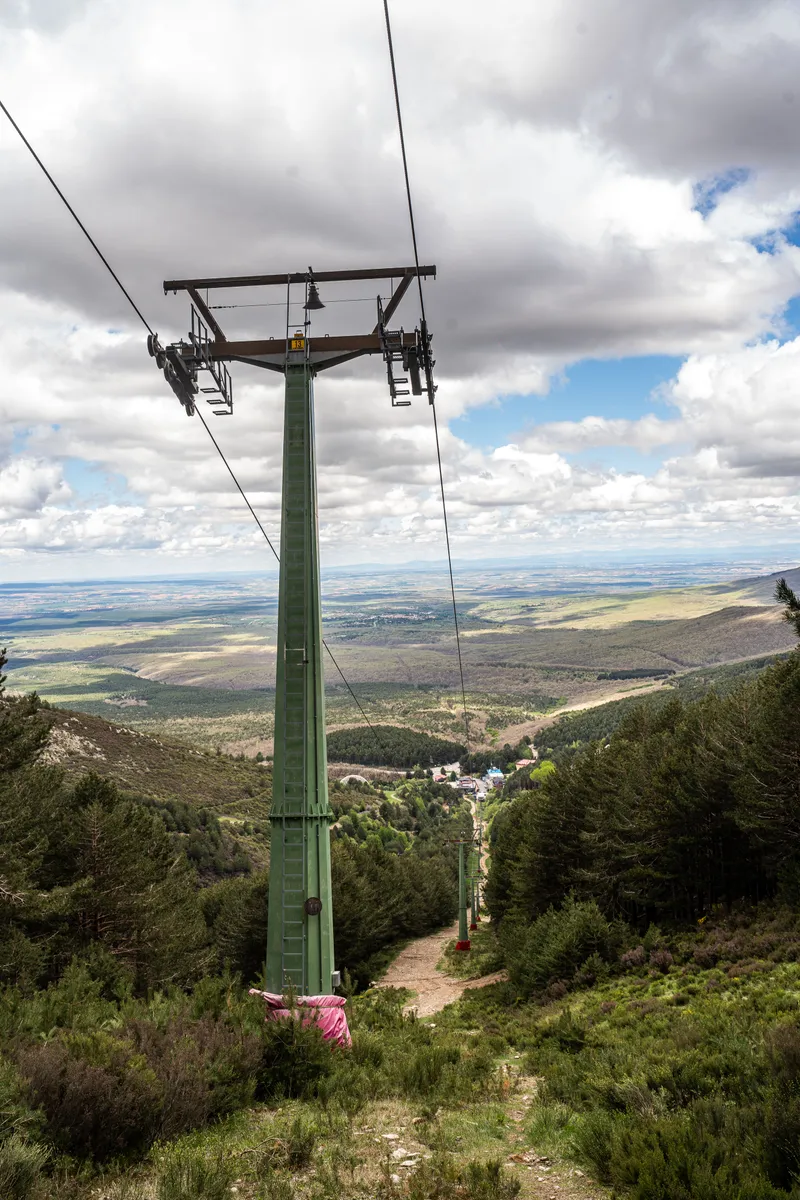
What you'll find at La Pinilla
Make sure the eclipse is not hiding behind clouds
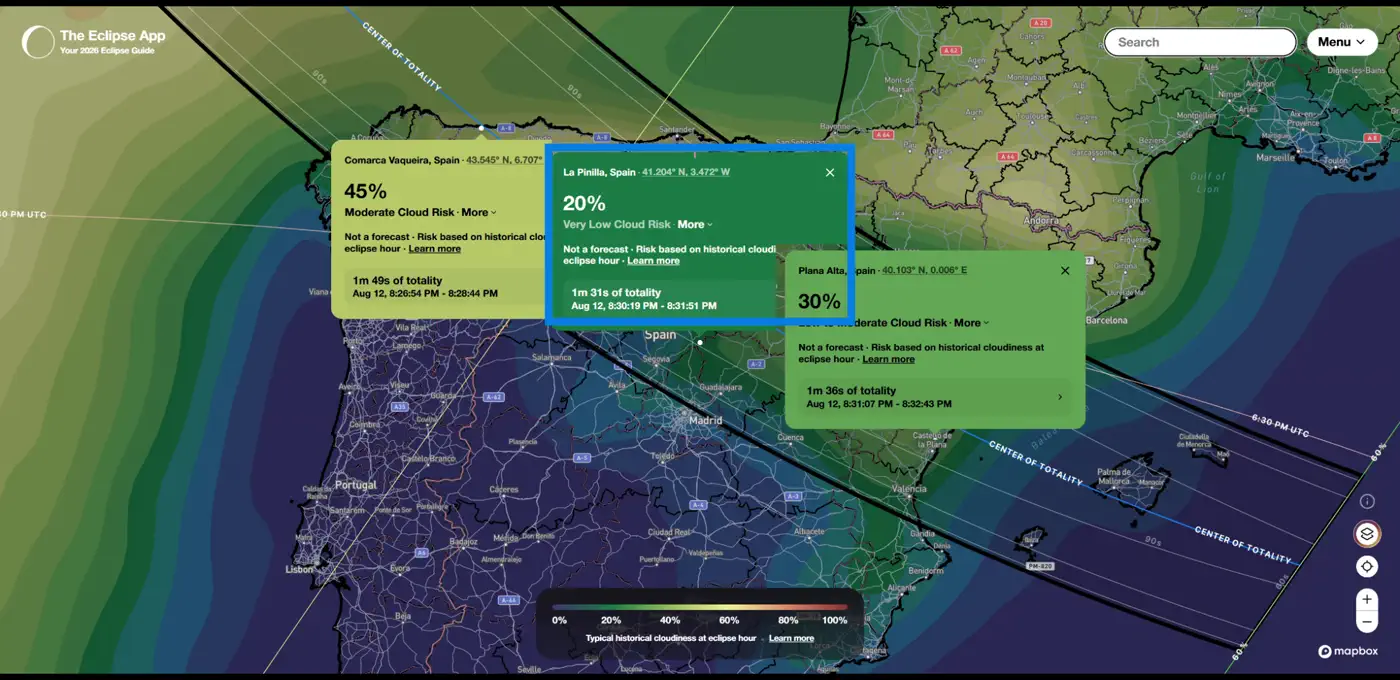
La Pinilla has low August cloud coverage (22%) compared to northern Spain (>50%) and Iceland (>75%)
View it from a high elevation
Located at 1,500m with areas to explore as high as 1,800m
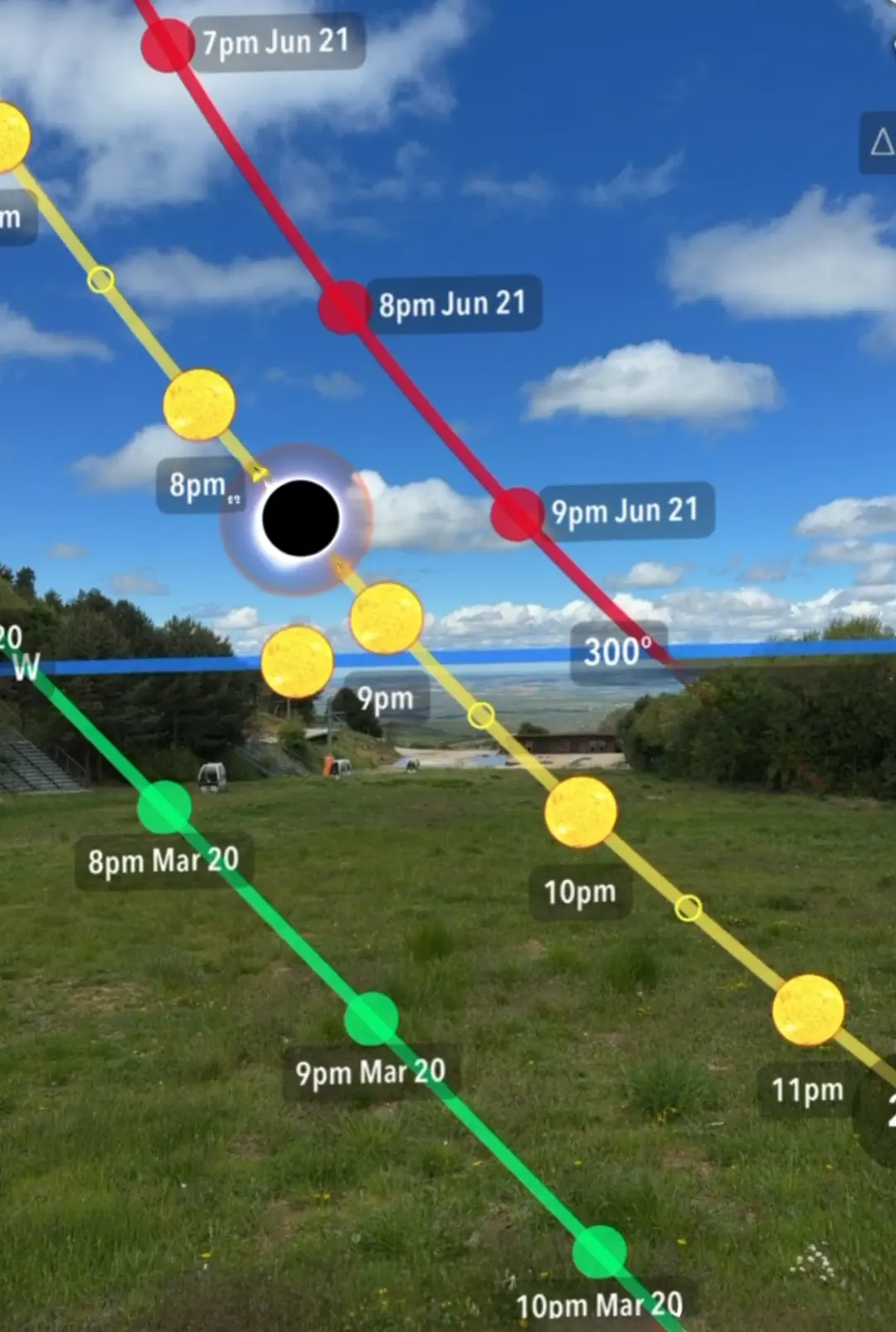
Make sure it is above the horizon
At La Pinilla the sunset is 45 minutes after totality (vs. only 20 in Ibiza or Mallorca) — meaning the sun is higher and the partial eclipse longer
Get near the middle of the totality path
Less than 80km from the center of the path — only 10 seconds shorter than the path's exact midpoint
Easy to reach
100km from Madrid-Barajas airport
Beat the traffic
People always try to view the eclipse last minute and end up in a traffic jam away from their goal. Plan ahead by beating traffic and camp on the mountain.
1500-1800m elevation eclipse viewing spot
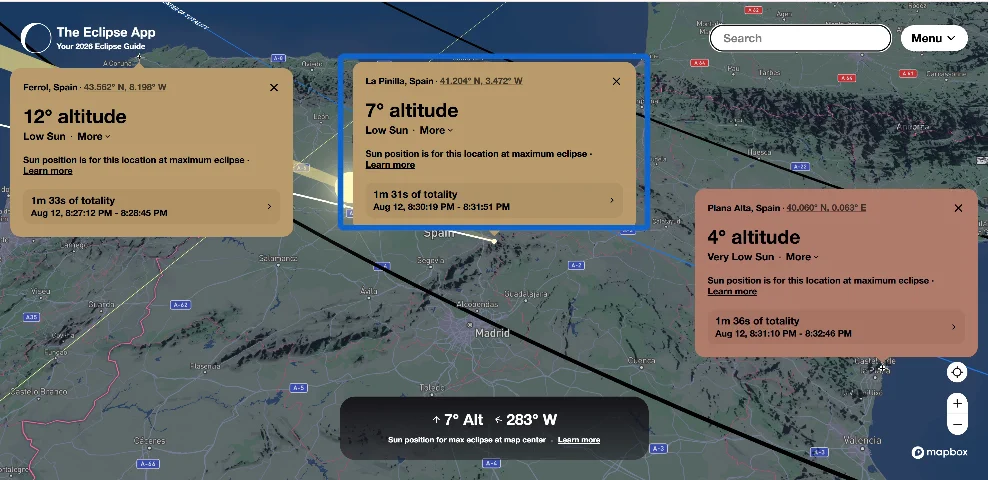
Across Spain the eclipse will be at low altitude.
In the north it'll be higher in altitude, but lower chance of clear skies.
A high elevation gains about 1–2 degrees at 1500m.
It also reduces the pollution, dust, pollen and water vapor — making the corona look brighter and clearer.
Explore Yourself
Eclipse Times
Sun Position
Historical Cloud Cover
JOIN US AND BE PART OF THE PHENOMENON
UNDERSTANDING THE ECLIPSE
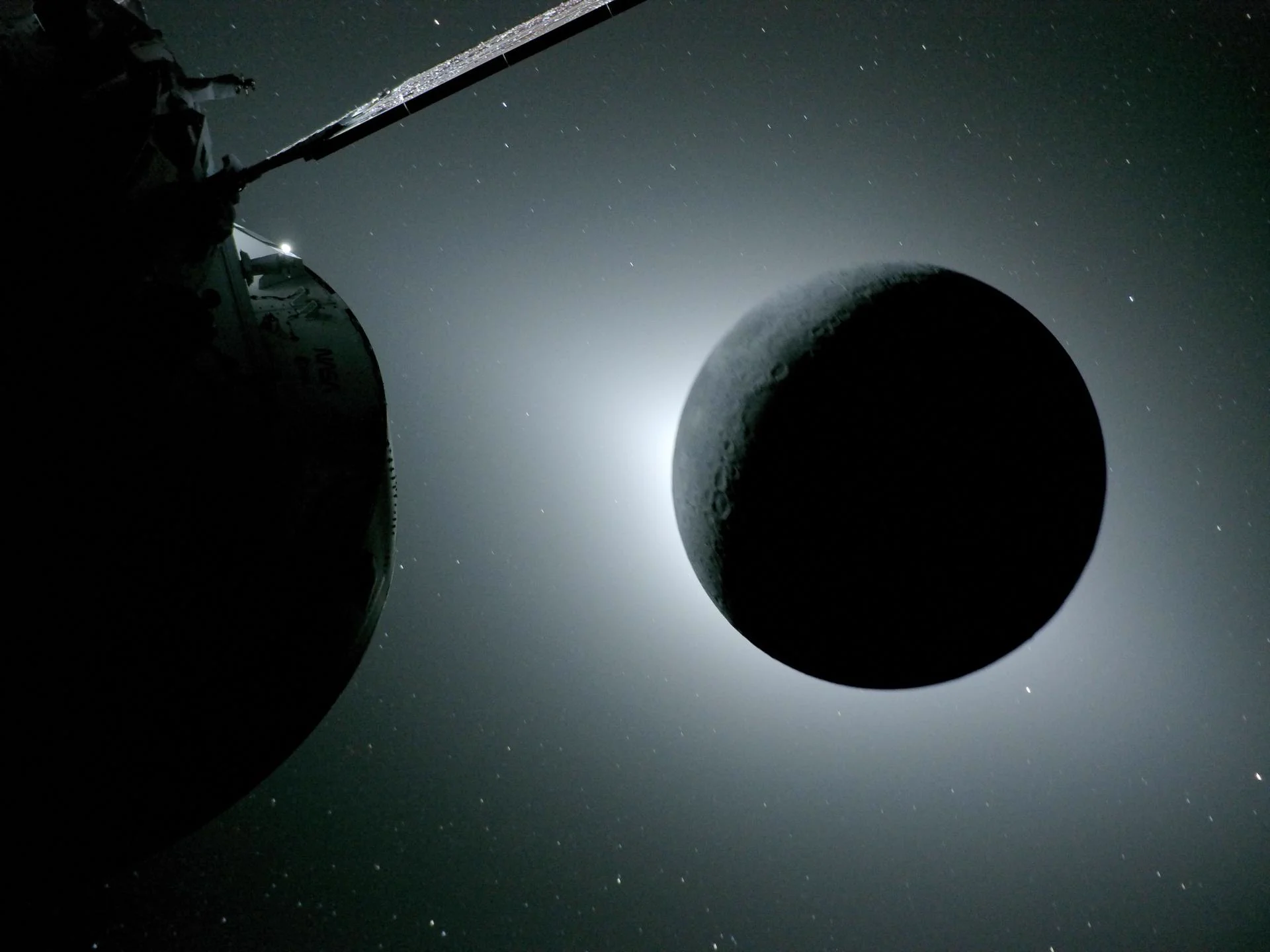
A total solar eclipse happens when the Moon aligns directly between the Earth and the Sun, casting its shadow across the planet. For a short time, daylight dims into an eerie twilight.
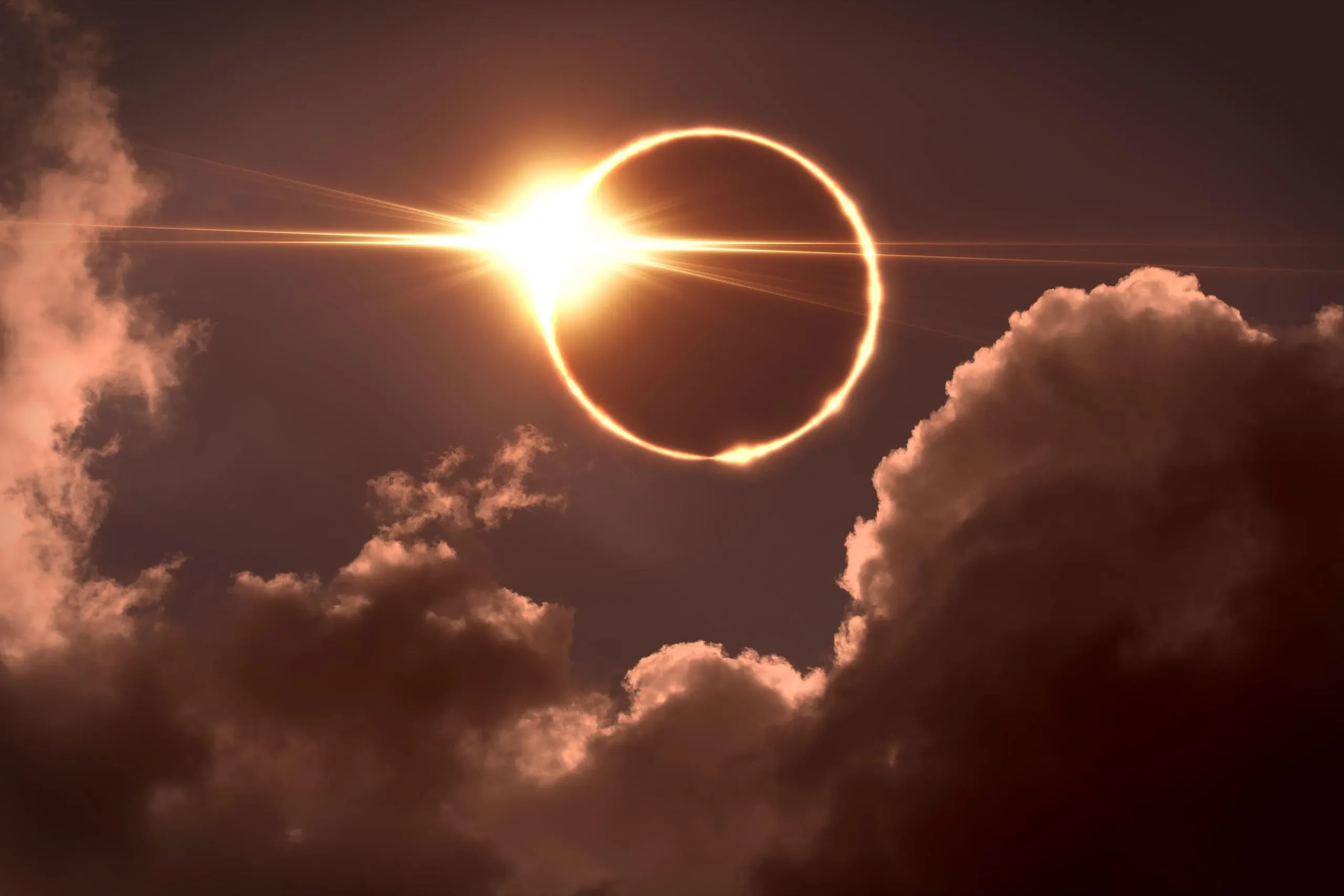
Although the Sun is about 400 times larger than the Moon, it is also roughly 400 times farther away. This precise balance allows the Moon to fully obscure the Sun, unveiling the solar corona — a glowing halo usually concealed by its intense light.
During a total solar eclipse, the Moon fully covers the Sun for a few minutes, creating a rare spectacle visible from limited areas on Earth.
SAFETY
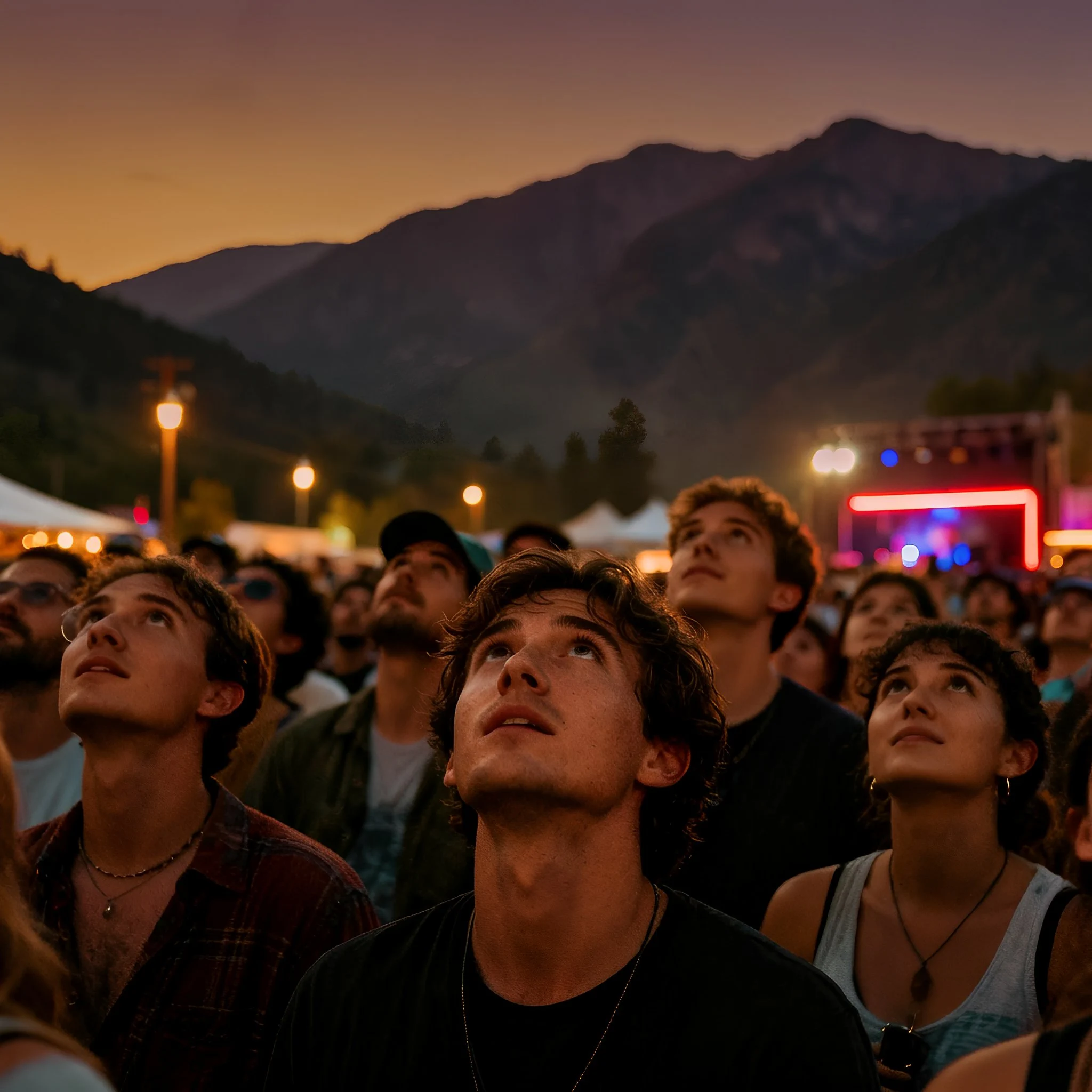
Witnessing a total solar eclipse is a truly extraordinary experience — one of the most powerful natural events you can observe. The shift in light, the sudden stillness, and the appearance of the solar corona create a moment unlike anything else on Earth.
It is also completely safe to enjoy, as long as proper eye protection is used during the partial phases. By wearing certified eclipse glasses and understanding when it is safe to look, you can fully immerse yourself in the experience with confidence and clarity.
RECOMMENDATIONS
WEAR ECLIPSE GLASSES
Use only ISO 12312-2 certified viewers. Standard sunglasses are not safe.
TIME YOUR VIEWING
Keep glasses on during partial phases. Take them off only during totality.
VIEW TOTALITY SAFELY
Only during the brief moment of totality can it be viewed without eclipse glasses.